A Layered Approach to Political Storytelling in the Work of Asif Kapadia
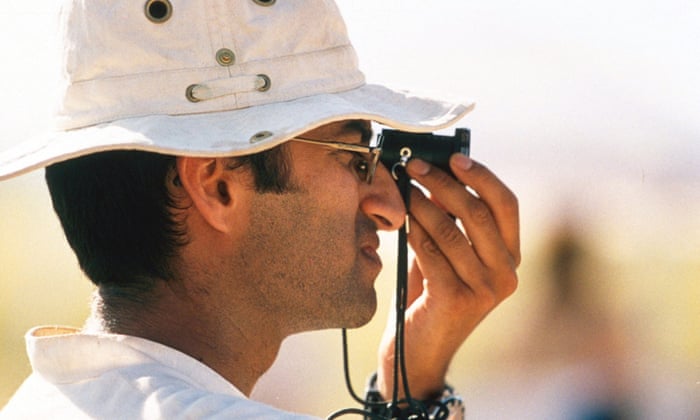
Asif Kapadia has long approached filmmaking with a resistance to conventional genre limitations. In his newest film, 2073, that refusal becomes a structural principle. The project, developed over three years, represents a fusion of speculative narrative, real-time documentary, and archival critique. Through this layered method, 2073 examines the convergence of populism, surveillance, and environmental collapse. Rather than speculating on a distant dystopia, Kapadia assembles present-day evidence to highlight how authoritarianism and technological dominance have already reshaped democratic societies.
The protagonist of the film, Ghost, exists in a fractured post-event world. Her silence is not just narrative but thematic, as she attempts to avoid detection in a society ruled by biometric surveillance, social control, and collapsing infrastructure. Her internal voice guides viewers through scenes that are both imagined and real—images of protests, drone warfare, climate disasters, and state violence all borrowed from the current global landscape. In this sense, 2073 challenges the boundaries of genre and blends science fiction with political reality.
Kapadia’s inspiration for this narrative stems from personal experience. Following the events of 9/11, he became a subject of repeated detentions while traveling, flagged and questioned despite his professional credentials. This decade-long experience informed his portrayal of suspicion, profiling, and displacement. In 2073, the fictional interrogation of Ghost echoes questions asked of Uyghur detainees in China, blending the personal with the political. Kapadia’s awareness of these patterns across contexts allows his work to serve as a broader commentary on how power operates through visibility and data.
The use of documentary sequences in 2073 adds an archival layer to the narrative. Kapadia incorporates voices from contemporary journalists and activists, such as Maria Ressa and Rana Ayyub, whose experiences with repression in the Philippines and India parallel the film’s fictional world. These interviews, framed as “time capsules,” bring immediacy to the film, reinforcing the idea that the future it depicts is already underway in various parts of the world. The intercutting of these testimonies with Ghost’s isolated story connects individual resistance to systemic analysis.
Kapadia’s decision to include prominent tech figures—Elon Musk, Jeff Bezos, and Peter Thiel—also adds urgency. Despite the film’s criticism of their influence, 2073 is distributed via platforms tied to the same companies, highlighting a paradox that Kapadia fully embraces. His willingness to confront the industries shaping public discourse, while still working within them, illustrates his commitment to unflinching critique. The film does not merely reflect anxiety; it is an instrument for reframing it.
His narrative is also shaped by his early life. Raised in Hackney by Indian immigrant parents, Kapadia was introduced to political thought by his older sisters, who were deeply engaged in feminist and anti-racist activism. This foundational experience continues to inform his work, especially his focus on outsiders confronting structural systems. His past subjects—Senna, Winehouse, Maradona—each battled institutions that misunderstood or consumed them. Ghost is no exception, embodying the consequences of a world that has surrendered autonomy to algorithmic and authoritarian powers.
Kapadia’s aesthetic choices in 2073 mark a departure from his earlier documentaries, which relied exclusively on archive and voiceover. Here, the combination of scripted drama and real footage amplifies the film’s emotional and political charge. Samantha Morton’s performance—minimalist and introspective—carries the weight of systemic critique without relying on traditional dialogue. Instead, her voiceover serves as a meditation on lost connection, stolen futures, and the cost of silence.
In a media environment often driven by entertainment and detachment, 2073 offers an alternative model—one rooted in urgency, resistance, and layered narrative. Through the film, Asif Kapadia invites audiences to consider how rapidly democratic frameworks can erode and how personal stories intersect with geopolitical consequences. His work remains committed to the act of bearing witness, merging storytelling with structural critique in ways that demand reflection and response.